When you start a business in Thailand, knowing your tax obligations from day one helps you avoid penalties and stay compliant. Whether you’re running a tech startup, a restaurant, or a consulting firm, here are the five key tax requirements every foreign business owner should know.
Read the full Thailand tax guides
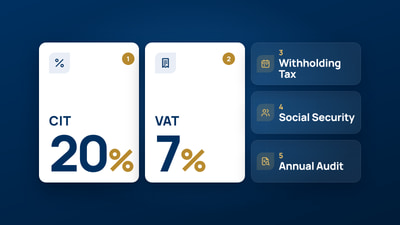
1. Corporate Income Tax (CIT): 20%
All Thai-registered companies pay corporate income tax at a standard rate of 20% on net profits. SMEs with paid-up capital under 5 million THB and revenue under 30 million THB benefit from reduced rates: 0% on the first 300,000 THB and 15% on profits between 300,001 and 3 million THB.
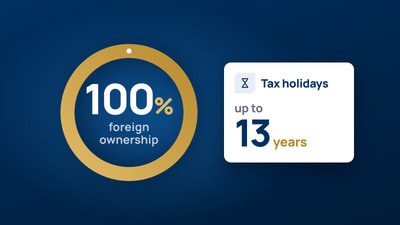
BOI-promoted companies may enjoy full exemptions for 3-8 years depending on their activity category, making BOI promotion one of the most attractive options for foreign investors.
Full guides: Half-Year Corporate Tax Annual Corporate Tax
2. Value Added Tax (VAT): 7%
Businesses with annual turnover exceeding 1.8 million THB must register for VAT and file monthly returns (PP.30) by the 15th of the following month (23rd for e-filing).
VAT-registered businesses charge 7% output tax on sales and can claim input tax credits on business purchases. For service businesses, the important distinction is that the output VAT tax point is when payment is received, not when the invoice is issued.
Full guide: Monthly Tax Filing
3. Withholding Tax: Monthly Filing Required
Thailand requires businesses to withhold tax on various payments and file monthly returns:
- PND.1: Employee salaries (progressive rates up to 35%)
- PND.3: Payments to Thai individuals (typically 3% for services)
- PND.53: Payments to Thai companies (1-5% depending on income type)
These are due by the 7th of the following month, with e-filing extending the deadline to the 15th.
Full guide: Monthly Tax Filing
4. Social Security Contributions
Every employer with one or more employees must register with the Social Security Office within 30 days of the first hire. Both employer and employee contribute 5% of salary, up to the monthly wage ceiling set by the Social Security Office.
Contributions are filed monthly and cover medical care, maternity benefits, disability, and old-age pension for employees.
5. Annual Audit Requirement
All Thai limited companies must have their annual financial statements audited by a registered Certified Public Accountant (CPA). Audited statements must be submitted to the Department of Business Development within 5 months of the fiscal year end.
This is a legal requirement regardless of company size or revenue.
Full guide: Annual Audit
How DDES Can Help
At DDES Accounting, we handle all monthly filings, annual returns, and compliance requirements for foreign businesses across Thailand.
Contact us for a free advisory session to discuss your specific tax situation.
Our services: Accounting and Tax Value Added Tax (VAT) The guides: Monthly Tax Filing Half-Year Corporate Tax Annual Corporate Tax Annual Audit